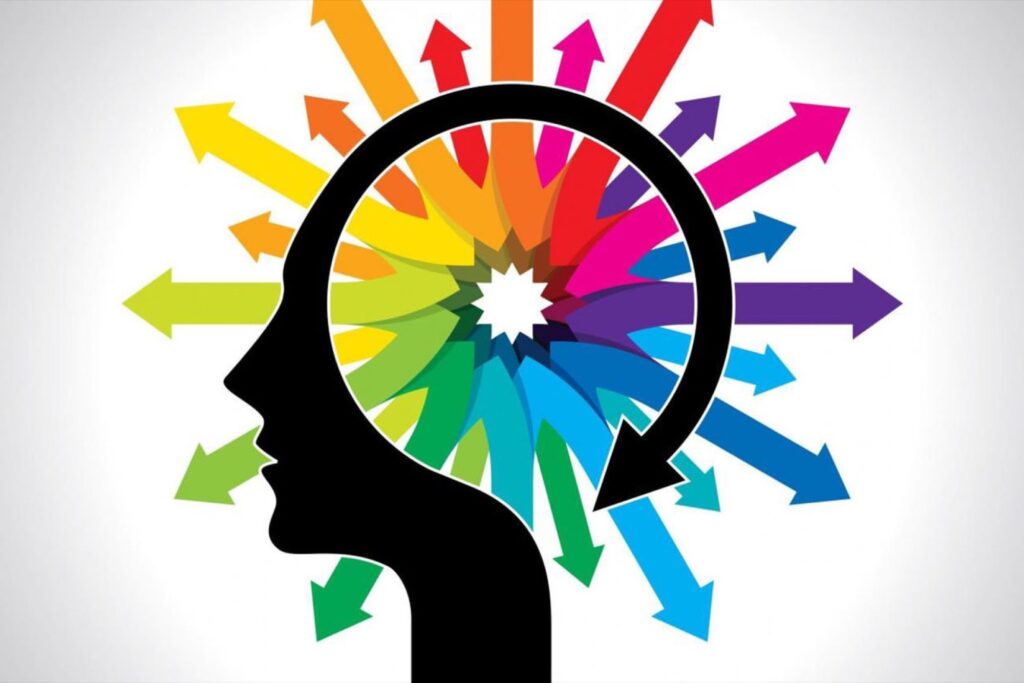
I realised the other day during one of my workouts – the best time of day for reflecting – that I talk quite a bit about psychology in these blogs and although it’s often relatable, it’s not always very practical or useful to others. Sure, I write novels and novels in themselves have a use; they give us an opportunity to exist in another world for a while that can feel somehow more meaningful than this one, or at least an escape from it, but I can definitely do more.
So I’ve been thinking about mental health a lot lately and the big things that impact our day-to-day lives and relationships. Obviously there’s a lot of complexities that go into this but I’m going to try to boil it down to 3 bitesize chunks that can help you think about your own psychology, which might give you some tools to help strengthen your relationships or at least the way you deal with difficult situations.
The main elements that I believe have the biggest impact on our daily mental health are as follows:
- Upbringing
- Life experiences
- Current environment
Upbringing
Let’s start with the first. Our upbringing usually sets our own personal standards of “normal”. This is important to recognise, since childhood has such a huge impact on our development and it can be very difficult to undo some of things set in motion during this stage of life. But recognition is the most important part of this. To develop ourselves, we always need to ask ourselves questions: why do I behave in this way? Why do I judge people who do this? Why do I need things to be a particular way. This often comes down to what our parents or guardians did as during our early years, we are observing the world around us and learning from others. Understanding that some of our behaviour may come from our parents can help to shift our outlook and start to break away from some of the more negative traits we may have picked up along the way.
Life experiences
Again, let’s start with some questions to help us think about how our personal experiences have impacted our current psychology.
How travelled am I? How well read? Have I had mostly positive or negative experiences with people? Have I suffered some abuse? Have I had health issues, money issues, anger issues? A lot of obstacles to overcome? How much support have I had, financially or emotionally, or how much have I had to do things alone?
The reason these questions are important is because all of these experiences reflect the way we react to certain people or circumstances. For example, if you’re someone who gets very defensive about a particular issue, or are triggered by a particular word. We have to ask ourselves, why? Is the other person to blame, or are our reactions a product of our own previously painful experiences?
So, why does this matter? Well it matters because once we recognise a personality issue in ourselves, something that hurts us, something that angers us, whatever it is, we can start to change that behaviour. Most of the time, people are not trying to hurt us. That is not their aim, and even if it is, we can get better at the way we react, because now we see the signs, now we know this is a flaw that we can improve on.
I want to add here, that “trying” to improve is the most important thing. We all make mistakes, we all get emotional, we all feel different on different days. We all have people who don’t treat us in the way we deserve, who don’t give us the trust we deserve, who don’t say the things we want or need them to say. I am no different in this. I am self-aware for the most part, but I still make mistakes, I react emotionally…there’s a reason I’ve written 270,000 words (so far) to express even some of my own thoughts, feelings, and experiences! None of this is easy. It’s always a work in progress.
Environment
For me, environment is the most important element of our day-to-day wellbeing. This includes all of the current things that are impacting us right now. Our jobs, our earnings, our living conditions, our current relationships.
How can we be peaceful in a chaotic home, or area? How can we feel safe when we can’t pay the bills? How can we be satisfied if we can only pay the bills? How can we feel comforted and understood in a volatile relationship? How can we feel valued in an unrewarding job? How can we feel energised if we’re always tired? How can we feel calm with so much responsibility? How can we feel happy when we are in pain or discomfort? How can we feel loved when we are alone?
For many of us, this is a lot to deal with. These are the biggest things impacting our lives and therefore our current psychology. For most people, and for a long time this included myself, our current lives are so overwhelming that we don’t do anything to improve them. But the good news is, these are actually the things we can change. I’m not going to lie to you, it isn’t easy, but if there’s one big lesson I’ve learned that I can pass on, it’s that doing difficult things benefits your life. Simple, right? Well, no.
What I really mean by this, is that it is extremely difficult to make big changes, because it involves changing ourselves. But in doing so, when we come out the other side, things can be easier.
I’ll give you a real-life example. Only a couple of years ago, I was in a dead-end, temporary job, sleeping on the floor in a house I shared with an ex-partner who I’d had a really toxic relationship with. I’m not going to go into detail, but the point is, I managed to change all of that. Now, as I write this, I’m sitting in my comfortable writing room in a house I alone own (let’s ignore the mortgage for dramatic effect!). I have a new career in IT which allows me to work remotely so I can still find time to write. I have a garage which I’ve converted into a gym so I can exercise every day without any subscriptions or long term costs.
So how did I do it?
Well, the first thing I did is get my fight back. I remembered how strong I am, how disciplined I am, and I just put that in a different direction. I’ve never known what I wanted to do. It didn’t matter anymore, I just needed to do something, so I chose something that would benefit my lifestyle – allow me to exercise and write, probably the two most important things to me.
The second thing was to make sacrifices. Something had to go, so I put the writing on hold and focussed on training myself, as cheaply as possible, around my current work. It was incredibly difficult, there were times I thought it impossible and wanted to give up, but I didn’t. I couldn’t believe it when I reached that moment where somebody actually gave me a job with no prior experience in the field; just purely based on my attitude and aptitude to learn.
As soon as I’d been in the job for a few months and passed probation, I applied for a mortgage and eventually found a house for myself. Then I converted the garage into a gym, which did of course have an initial cost, but I did do everything myself, something I might not have had confidence to do before.
What I’m trying to get across here, is that if I could do this, if I could make these changes, so can you. Life has still been difficult since, but at least now I am more robust again, now I have freedom away from negative influences, or at least the choice to avoid those things.
So, if you are someone looking to improve your mental health, aside from the more obvious things you can do, such as seeking help, this is my advice:
Think about these 3 things.
- Upbringing
- Life experiences
- Current environment
Think about how they impact you and what you can do to improve yourself. It doesn’t have to be everything at once. Take small steps if you need to – in fact I would recommend that approach. But the number one thing you’ll need is discipline, and for me and most other people who have made big changes, this starts with a daily routine. Getting up at the same time of day, at least on your working days is absolutely crucial, as is starting the day with some form of exercise. Don’t turn your phone on until this is done. This is what will start your day off positively and away from other distractions.
Again, I’m not saying any of this is easy, and there may need to be sacrifices to achieve what you want to achieve. I get up at around 5:30am to have time to exercise and write before an 8 hour shift, 5 days a week. A couple of years ago, I would not have thought I’d have the energy for all this, but it’s the routine that actually gives me the energy. It does also mean I go to bed at around 8:30pm-9:00pm but as I’m the only one here, it doesn’t really matter. You do what works for you, or at least start making moves in that direction.
I am not super-human (but I’ll tell myself I am if it helps get through a 5:30am winter workout). I have injury problems, I get ill quite often, hurt more often. Remember. If I can do this, so can you.
A.J. Austin
 theinnerlands.com